Be Kind, Be Kind, Be Kind

I voted today. Tomorrow, or tonight if you stay up late enough, almost everyone will have a reason to despair because of the results of a local or national election.

I believe, however, that neither politics nor economics ultimately decides the quality of our lives. I am not saying these systems don’t affect us. A leader’s decision to go to war, for example, changes lives forever. I am saying that there are other, more powerful forces at play.

I base this conclusion on the version of history taught in American primary education, which is mostly if not exclusively politics and economics. If history consisted only of the events in the history books, I’m convinced the human race would have wiped itself out long ago because, according to the official version, very little good ever happens. People and nations in power attempt to retain or expand that power and harm or kill a lot of other people along the way. If nothing stood in opposition to that story, the world would be a much more dismal place than it is.

I think what keeps or doesn’t keep us going is how kind we are to one another. While trying to figure out the motivation of the characters in my novel, I wrote to a few friends and asked them what they wanted out of life and why. My former Chinese religion professor wrote back and said, “Be kind, be kind, be kind.”

At the time I thought, that is not an answer, but now I wonder if it might be the only one worth pursuing.

Much of life is beyond our control, even in a country where we get to choose our leaders and in certain cases our laws. Sometimes being kind is all we can do for another person and all we can do for ourselves.

I think we often see kindness as a small gesture and forget what a tremendous difference it can make. It can change the course of history.
Homecoming

First, thank you to Anne for her wise guest blogs. Those hard-to-begin apples came to mind as I sorted through my accumulated emails. Second, this is your blog on some serious jetlag, so I’m going to keep it short. If it doesn’t also come out sweet, I beg your indulgence until my brain and I are reconnected in the same time zone next week.

I was in transit for a few days, which gave me the odd feeling of being location-less. Place began to slip away at the fancy airport hotel that lacked any hint of Greece except the stuffed grape leaves at the buffet. It disappeared altogether during a surreal sprint through the Vienna airport—picture any dream you’ve had about trying to get somewhere and failing, give it to Kafka for rendering, and you’ve got a good idea of being between terminals in Vienna. And finally, I spent a night in New York City but a New York City without subways and almost without sidewalks as my cousin picked me up from the airport and a car delivered me back to it at 4 a.m. the next day.

All of which made me grateful that I belong to a certain spot of Earth. The oak trees on the hills began to place me during the drive from LA. While I was eating lunch on my first full day back, a hummingbird came by to check out the Mexican sage by my bench. Greece and California look a lot alike, but I didn’t see any hummers while I was there.

So to all the people, creatures, and plants, the smell of the air and the feel of the soil, the ocean and the hills, and even the In ‘N Out hamburger joints, thank you for making this place home.

Come in! Come in!

My own bad behavior recently reminded me how important it is to support each other in whatever we dream to do.

A friend on the van knows someone who is thinking about writing a book and so asked me for publishing advice. My internal reaction was, “Write the blankety-blank book and then worry about it.”

My external reaction might have been slightly more gracious, but it wasn’t exactly welcoming. I didn’t say, “Wow, that’s great. What a fabulous project to undertake. What does she want to write about?” I didn’t pour out a list of helpful resources.

Trying to get published is often discouraging. I recently read an article in Poets and Writers Magazine that said, without connections, a writer has a one in 11,111 chance of getting an offer of representation from a typical literary agent.

That means you can be in the top .0001% of writers and still not get signed by a particular agent. My math is not good enough to figure out the odds if you considered all agents, but certainly not good enough to make me dance a jig.

Which is all the more reason to be encouraging to others entering the game. Nobody enjoys being one in 11,111. It is better to be two and even better to be five or ten, exponentially better, in ways that defy mathematics.

I don’t know why we need the support of others who share similar experiences, but anyone who’s ever felt really lousy and then talked to a friend or family member and felt better knows it’s true. We are social beings, and I think it’s hard wired into us to thrive more completely in community.

So, henceforward, I will take as my motto Shel Silverstein’s poem “Invitation,” which begins, “If you are a dreamer, come in.”

Learning from Your Students

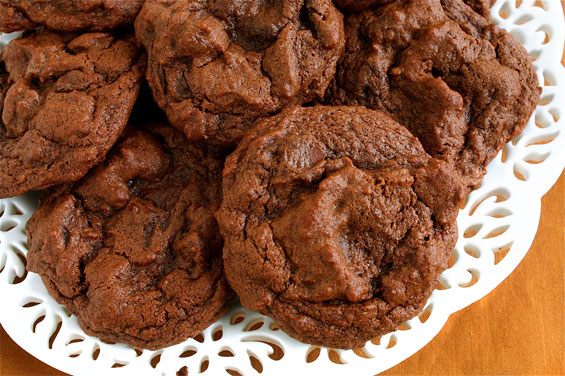
Any day with homemade cookies is a good day. Last week a troop of freshmen appeared in our office bearing plates laden with chocolate chocolate chip cookies. Clearly, these freshmen have good taste.

chocolate chocolate chip cookiesWe didn’t know what to make of them at first. I work in an administrative office at a university, and we generally only see students when they are lost or in serious trouble. These young men and women had baked cookies for everyone in the building, all four floors, to show their appreciation “for everything you do for us.” I’m sure most of them have no idea what we do.

Many of us, myself included, tend to dismiss the contribution of those whose jobs we don’t understand. These students took the opposite approach, assuming we were doing something worthwhile on their behalf, a generosity that meets or exceeds that of baking dozens of cookies for people you don’t know.

I think the world would benefit from more random acts of appreciation. They should probably be done regularly, like flossing. They could be simple, like thanking the person who checks my groceries with more than a mumble instead of interacting solely with the credit card machine.

One blogger has taken it a step further in her Year of Kindness campaign. She does things like buy a complete stranger a cup of coffee because he looks sad or give away dozens of roses to whoever will take them. I’m probably not that advanced yet, but I could start by recognizing those people who help me regularly rather than taking them for granted.

When the cookie bearers stepped off the elevator, the atmosphere on our floor suddenly became Disney-worthy — sun shining, birds singing. I found myself asking everyone, “Did the students come to your office?” That kind of good cheer is worth spreading.

Starting the Season Right

I almost subjected you to deep thoughts this week. Nothing cures unnecessary deep thoughts like a good party, and no one throws a better party than Central Coast Soccer. I highly recommend parties over deep thoughts. First of all, there’s more food. Second of all, people are enjoying themselves.

soccer ball with Santa hatHere is what I love about CCSoccer: it is coed; we don’t keep score; the league asks anyone who is too aggressive to leave; newcomers to the game are welcomed, encouraged, and passed to; everyone on the team having fun trumps playing the best possible game. This truly recreational atmosphere is as rare as a cheerful Woody Allen movie, one out of every few thousand.

Here is what I love about the CCSoccer party: it takes a moment to recognize people because they’ve blow-dried their hair and no one is sweaty. Greetings resemble those between long-lost friends whether people haven’t seen each other for a year or they just played together Wednesday night. Everyone brings their kids, who get to run around and play and be kids. Stealing during the white elephant gift exchange is merciless. The food is really good.

The attitude of the league creates the ambience of the party. The members of this community have practiced not taking one another too seriously, and all the time they’ve spent together, they’ve spent doing something they love—a rare combination.

I don’t know the details of these people’s lives the way I know those of my closest friends or family members, but whether I only exchange hellos with someone or the conversation continues through year-in-review updates, seeing each person cheers me. The smiles and hugs throughout the room make it clear others feel the same way.

If the spirit of the holiday season includes welcoming, supporting, and enjoying those around us, this group is ready to celebrate.

Happy to Inherit

Newsflash: your parents were once children. Some of you may have figured this out before I did, but the corollary may surprise you: your aunts and uncles were, too.

Last weekend my dad, a couple of his siblings, their respective spouses, and I gathered for an incomplete but very enjoyable family reunion. It has only recently occurred to me that these people—spouses excepted—have spent all or most of their lives together. They know each other in a variety of contexts: childhood, adolescence, newlyweds. They know the stupid choices, the heartbreaks, the brilliant successes, the unexpected joys.

They hold all these versions of each other within their memories and yet miraculously manage not to hold each other to those versions. Forgiving and forgetting even the small things can be difficult—the broken toy, the gloves thrown in the snowbank (sorry, little sister)—and history between siblings is not always comprised of only small things. This willingness to let go is a big chunk of what it means to be an adult, and it is rare.

I appreciate this group’s ability to laugh—kindly—at the way we are utterly and predictably ourselves. My uncle will always pause mid-conversation to find the source of the unusual airplane motor the rest of us don’t even notice. My dad will always search out mayonnaise packets, oblivious to my other uncle’s impatience to get where we’re going. But by and large, everyone chooses to be entertained rather than annoyed by each other’s idiosyncrasies.

After my grandmother died, the entire family gathered at a beach house with an astonishing collection of food and drink. Toward the end of the week, my dad and his brother and sisters sequestered themselves in one of the bedrooms for a few hours. When they emerged, all my grandma’s assets had been bloodlessly divided up, the only item of contention a CD/tape player that may have been worth $100 at the time. They flipped a coin. No hard feelings. No lawyers. Everyone not only still talking to each other but also still enjoying each other.

And that, perhaps, is the older generation of Henrys greatest legacy to my generation: the lived conviction that enjoying each other is more valuable than whatever else might happen.

Built to Last

Two pieces of advice: 1) Don’t throw away your junior high yearbook. 2) If someone invites you to spend an evening with four best friends who haven’t seen each other in fifty years, do it. And stick around until the yearbooks come out.

I lucked into just such an evening recently. An old friend of my parents had recently attended her fifty-year high school reunion, and her closest friends from that time had gathered together for a few extra days. She invited my mom and me to spend an evening with the group. It didn’t occur to me until the drive home that I’d just been honored to spend an evening with my elders.

Because we don’t much practice respect for our elders, the term for me conjures up tribal matriarchs in smoky tepees giving sage and perhaps difficult to understand advice. This is wisdom—mysterious in both content and transmission.

The evening bore no resemblance to that picture. The stories told ranged from hopping on a stranger’s motorcycle with a frog in order to arrive in Calaveras in time to register for the jumping frog contest to sneaking into the priest’s side of the confessional and accidentally hearing someone’s confession, complete with absolution and penance.

This is real wisdom—the gathered stories and laughter of lives fully and well lived, a love that survives an absence of fifty years, the sharing of both. We don’t find wisdom by trying not to make mistakes, by staying safe, or by striving to be good, as I often mistakenly believe. Wisdom finds us when we wade into life, when we enjoy the ride, when we look on the other side of the screen.

I’m certain none of those present thought of the evening as anything other than time spent with good friends. I can’t think of a wiser use of an evening.

Falling Back In

Going back in time is a dicey proposition. I tested it out last week in Chicago when visiting with some friends I hadn’t seen in seven or eight years.

We had not kept in close touch. I am a lousy correspondent; five Christmas cards constitute an overachiever year for me. I also tend to get wrapped up in the local day to day, leaving little time for those far away.

The bus ride to my old neighborhood gave me a jarring sensation of the familiar turned foreign, as in a dream when you know you’re at school but the building is clearly your Aunt Millie’s house. Visiting with old friends, on the other hand, felt surprisingly normal—no awkwardness, no tension, as if I dropped by for lunch on a regular basis. Though we had only an hour and spent most of it catching up on life details, simply being in each other’s company gave us all a good deal of joy. Something within us still fits together in whatever ways first drew us to one another.

These people’s presence in the world makes me happy. It still matters to me how their particular corner of life is turning around. Their idiosyncrasies still charm me. How can I claim all that when we rarely take the time even to shoot off an email? I suspect that friendships are amazing, elastic things, and our capacity for love exceeds the time available to us, taken up as it is with the necessities of work, laundry, and the like.

There are people scattered across the globe whose daily lives used to intersect with mine but now diverge completely. Some of them I can reasonably hope to see again; others I likely never will. Yet I find it comforting that I care what happens to them and that they may return the favor.

Get Your Sopas on

Heaven may very well look like a sopas feed. Though technically the event I attended is called a St. Anthony celebration, this Portuguese-American tradition appears to boil down to getting together to eat. As you know, I support basically any gathering and eating opportunity.

Sopas (pronounced sopish and sometimes spelled soupish, at least on the Internet) means soup in Portuguese. It consists of beef cooked until it’s falling apart with onions and sometimes cabbage and is served with day old French bread soaked in the juices until it achieves a delightful mushiness.

Sopas forms the foundation of a cultural tradition that ties together the Portuguese-American community all over California. That’s right: people who don’t know each other travel from all over the state to eat together. Every weekend from June through August, you could, if you so chose, travel to a different city and participate in the sopas goings-on. All are welcome. They don’t ask for your percentage Portugueseness at the door.

Every town chooses a high school-aged queen to represent Queen Isabella of Portugal, who rescued her country from a famine. Queens from all over the state invite other queens to share in their city’s parade and celebration.

My mom and I were lucky enough to sit across from a woman who grew up very much involved in the Portuguese community. The woman confessed that the queens try to outdo each others’ dresses and intricate, hand-embroidered capes, but all the same, whether you share the parade with a poorly clad queen (of which there were none) or one who manages to upstage you, you still sacrifice the idea that you’re the only queen in town.

As the woman told her stories, I could see lines of connection threading their way through the entire state of California. Someone who lives in Bakersfield has an opinion about the way they cook sopas in Pismo Beach or San Francisco or San Diego. Whatever her opinion, she knows the cook; she knows the city; by the end of the summer, she probably knows all the queens if she’s following the circuit.

Fittingly enough, sopas is served family style. As we sat at long rows of picnic tables and waited impatiently for the big, dented, metal bowls of food to come around, I had no doubt everyone would eat her fill.

The Sum Thing

I love stealing stories. This story is stolen.

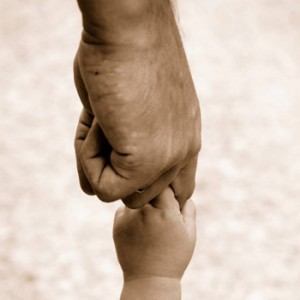
old-young-holding-handsWhen he was young, my friend’s brother went to their grandfather and said, “I want the something.”

“What exactly do you want?” the grandfather asked.

“The something,” the boy replied.

“What does it look like?” the grandfather asked.

“You know, the something,” the boy said.

Then, much to his credit, the grandfather asked, “Do you know where it is?”

“In your office,” the boy said.

The old man and the young boy retired to the office where the grandfather held up thing after thing to no avail until he produced the calculator. At this, the boy nodded his head vigorously and held out his hands to receive the sum thing.

I often look for the sum thing in life, the experience or theory or explanation that will make everything add up, that will impart meaning to even the most drib drab days, the most miserable failures, the most painful losses. I don’t think it exists. In fact, I think it’s bad for us, like eating too many Twizzlers, because it keeps us living in future tense rather than present. It puts both hope and contentment (not to be confused with complacency) always just out of reach.

My spirits don’t exactly rise when I acknowledge that nothing waits around the next bend to transform my life into a complete and sensible and beautiful whole. A rather scary alternative presents itself: I create my life, which will likely come out messy and haphazard and undisciplined and wildly inconsistent and may, for all that, still be beautiful.

We don’t need to take on this life creation alone, though. If our lives belong to us, they are ours to share. We have friends, family, and communities to help us. We have grace. When all else fails, we have Ben and Jerry’s. And who knows, if we stop focusing on an unattainable totality, we may discover we like what we’ve made.