Mama Told Me There’d Be Days Like This

Sunday was one of those days most sane people prefer to skip. You may know the kind, the ones when some Monster of Gunk deep inside you decides to rise up and disgorge purplish-black sludge all over the otherwise harmless world. Though absolutely no outside circumstance has changed, you know as soon as you open your eyes that the only possible way to survive the day is to never get out of bed.
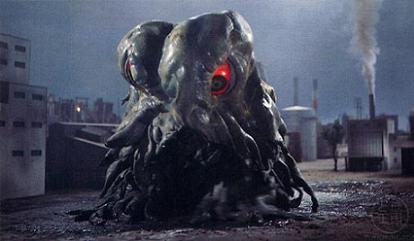
gunk monsterPerhaps the uber-sane among us find some use in these days. Maybe the Dalai Lama wakes up, spies the gunk monster, and says, “Ah, another opportunity for instruction!” But I like to think he wakes up, bangs the heel of his hand against his forehead, and says, “Oy!” (Because everyone knows the Dalai Lama is secretly Jewish.)

I don’t know of a way to enjoy these days. I’m not particularly sure how to be grateful for them. I am certain they exist, for some more often than for others, and I know it’s important to recognize and share that existence. Otherwise we start to think everyone else’s insides are full of daffodils and butterflies and we alone are capable of spewing such ugliness for so little reason.

These days do end. On Tuesday, I spent the evening joyfully eating steak and drinking very good wine with my aunt and uncle. On Sunday, I could neither feel joy nor quite believe in its possibility. The best I could do was to remember that nothing lasts; this too shall pass, and God, though obviously absent and clearly inept, is in charge. Remembering does not yield great comfort during gunk monster and me bonding time, but it keeps the bottom from falling out of things. Comfort comes only later, when the world has righted itself through no effort of my own and the blue sky and sunshine seem once again to have some relation to me.
Get Your Sopas on

Heaven may very well look like a sopas feed. Though technically the event I attended is called a St. Anthony celebration, this Portuguese-American tradition appears to boil down to getting together to eat. As you know, I support basically any gathering and eating opportunity.

Sopas (pronounced sopish and sometimes spelled soupish, at least on the Internet) means soup in Portuguese. It consists of beef cooked until it’s falling apart with onions and sometimes cabbage and is served with day old French bread soaked in the juices until it achieves a delightful mushiness.

Sopas forms the foundation of a cultural tradition that ties together the Portuguese-American community all over California. That’s right: people who don’t know each other travel from all over the state to eat together. Every weekend from June through August, you could, if you so chose, travel to a different city and participate in the sopas goings-on. All are welcome. They don’t ask for your percentage Portugueseness at the door.

Every town chooses a high school-aged queen to represent Queen Isabella of Portugal, who rescued her country from a famine. Queens from all over the state invite other queens to share in their city’s parade and celebration.

My mom and I were lucky enough to sit across from a woman who grew up very much involved in the Portuguese community. The woman confessed that the queens try to outdo each others’ dresses and intricate, hand-embroidered capes, but all the same, whether you share the parade with a poorly clad queen (of which there were none) or one who manages to upstage you, you still sacrifice the idea that you’re the only queen in town.

As the woman told her stories, I could see lines of connection threading their way through the entire state of California. Someone who lives in Bakersfield has an opinion about the way they cook sopas in Pismo Beach or San Francisco or San Diego. Whatever her opinion, she knows the cook; she knows the city; by the end of the summer, she probably knows all the queens if she’s following the circuit.

Fittingly enough, sopas is served family style. As we sat at long rows of picnic tables and waited impatiently for the big, dented, metal bowls of food to come around, I had no doubt everyone would eat her fill.

The Sum Thing

I love stealing stories. This story is stolen.

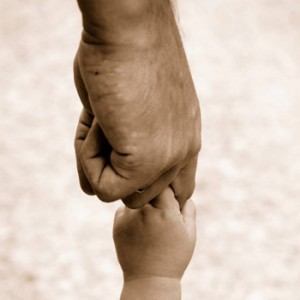
old-young-holding-handsWhen he was young, my friend’s brother went to their grandfather and said, “I want the something.”

“What exactly do you want?” the grandfather asked.

“The something,” the boy replied.

“What does it look like?” the grandfather asked.

“You know, the something,” the boy said.

Then, much to his credit, the grandfather asked, “Do you know where it is?”

“In your office,” the boy said.

The old man and the young boy retired to the office where the grandfather held up thing after thing to no avail until he produced the calculator. At this, the boy nodded his head vigorously and held out his hands to receive the sum thing.

I often look for the sum thing in life, the experience or theory or explanation that will make everything add up, that will impart meaning to even the most drib drab days, the most miserable failures, the most painful losses. I don’t think it exists. In fact, I think it’s bad for us, like eating too many Twizzlers, because it keeps us living in future tense rather than present. It puts both hope and contentment (not to be confused with complacency) always just out of reach.

My spirits don’t exactly rise when I acknowledge that nothing waits around the next bend to transform my life into a complete and sensible and beautiful whole. A rather scary alternative presents itself: I create my life, which will likely come out messy and haphazard and undisciplined and wildly inconsistent and may, for all that, still be beautiful.

We don’t need to take on this life creation alone, though. If our lives belong to us, they are ours to share. We have friends, family, and communities to help us. We have grace. When all else fails, we have Ben and Jerry’s. And who knows, if we stop focusing on an unattainable totality, we may discover we like what we’ve made.

Workin’ for a Livin’

“Create a life you actually want for yourself,” poet David Whyte says in his Footsteps: a Writing Life CD set. And I think, “Yes!” Who can disagree with that fabulous Yorkshire accent, much less the sentiment?

“Isn’t there something we can do besides working?” a friend and colleague says. “Yes!” I reply and then spend roughly half my waking hours doing just that.

Work offers definite benefits beyond the simply monetary. Some people practice professions they enjoy. Offices or factories provide forced community, teaching us how to live alongside those we might not invite to dinner. I’ve developed skills at work I may never have discovered otherwise. Couldn’t all that happen outside of work, though? Absolutely.

If you take a look at the vast scope of human history, the majority of the population has spent most of its time growing, killing, and cooking food. And cleaning. I’d much rather write novels than the accreditation reports my work demands, but I’d much rather write accreditation reports than beat dirty clothes against rocks in the river.

As a species, we’ve just begun this diversification of tasks, and perhaps we haven’t chosen as wisely as we could have thus far. Perhaps we’re going through a stage, like adolescence, but tell a teenager she’s miserable because she’s a teenager and see how much comfort you’ve conveyed.

So how does one persist in work that is tolerable but not that which one actually wants for oneself? If you have a fabulous answer, please leave it in the comments below.

I try the following, which sometimes help and sometimes don’t: vacation; gratitude for not having the myriad of jobs I don’t have, like bus driver or president; lots of potlucks; sunshine breaks; gratitude for the things work has given me, such as a car, a house, friends, perspective.

And as often as possible, I remember a time when I was sticking small labels on tabs, a task whose eventual obsolescence no one will mourn. One moment life consisted of a mindless routine, and the next I felt I was in exactly the right place doing exactly the right thing. I didn’t even mind that the right thing was affixing small pieces of gummy, flexible plastic.

I’ve never felt that way again, but I choose to think it’s always true. That doesn’t mean I don’t hope and pray my job description will read well-paid novelist before the next accreditation report rolls around, but it opens up the possibility that this work we sometimes resist and often don’t understand can place us, against all our expectations, where we need to be.

A Sporting Chance

Though some may not realize it, the most important sporting event in the world took place a couple of weeks ago: the Women’s World Cup. If you don’t yet recognize the Women’s World Cup as holding that lofty position, you may leave your misguided comments below.

For days following the final, people who have no particular interest in soccer came up to me and said, “Did you see that game?” I don’t know whether they watched the entire 120+ minutes or saw highlights on the evening news, but their comments made it clear that sports create a point of connection.

They’re not always the healthiest connections. People trampled to death at soccer matches or assaults on opposing fans following American football games don’t foster open, accepting community. But if you take the sum total, from AYSO to the Olympics, sports teach both players and fans the building blocks for creating community more often than not.

I recently joined an ultimate Frisbee league. Ultimate has no refs, so players make their own calls, which inevitably leads to contention over fouls, which leads to grumbling, a few snide comments, and a lot of sideline conversation. But then it’s done. No one rolls the previous game’s complaints forward to the next week. Given the fact that for years I resented my sister getting a rabbit when I only had a bird, this letting go impresses me.

The opposing team isn’t always the difficult bunch. At the end of a recent game, one of the young women on our team gathered us together and, in an act of courage I could not have equaled at her age and perhaps still cannot, reminded everyone to respect each others’ opinions, regardless of experience level. My team responded by affirming her request and apologizing—no defensiveness, no ego. Remarkable.

As a kid, I hated both participation and sportsmanship awards because you only receive them when you lose. The more I play, though, the more I realize how sometimes difficult and ultimately rewarding participation and sportsmanship are. Only being competitive doesn’t require much maturity, and winning doesn’t always require the strength of character losing does.

We will all fail in both small and spectacular ways: not get a job offer, get dumped by a boy/girlfriend, make a joke nobody laughs at, do or say something that hurts a friend. These moments may matter more than the dropped catch, the missed goal, but if we’ve practiced how to behave on the field, we might remember when we really need to.

Relationships Unplugged?

This post marks my entry into the Post A Week club, an exclusive group that, like so many online communities, requires little more than signing up, in this case by committing to post to one’s blog once a week. Ironically, I almost missed my Tuesday deadline because my sister is visiting from out of town and I can’t resist late night board games with her.

Balance between real and virtual relationships often eludes me. I try to err on the side of more time with people who are physically present. Many of my good friends live elsewhere, though, and those relationships might wither without the Internet.

As Michael Wesch points out in his From Knowledgeable to Knowledge-Able TEDx talk, we can technologically connect online with very little effort, but creating true connections is no easier than it’s ever been. Viewing the latest cat video to go viral does not help me understand or care for the other million or two people who watched the same video.

A friend summed it up well once, saying, “One more report on the Middle East, one more TED presentation on happiness, five more posts on the legal blog, three related YouTubes of lemurs. The clickage SO rarely synthesizes itself into a satiety—unlike conversations with good friends.” Of course, she said it in a Facebook message.

Online communities do good work in this world. A woman in Seattle and her soulmate who happens to live in Tampa can meet on match.com. People can encourage sick or dying friends on Caring Bridge. Lives are saved using Ushahidi. And without Facebook I wouldn’t have had dinner with the above-mentioned friend or know nearly as much about my sister’s life during the 358 days a year she spends thousands of miles away.

So perhaps we need to consider the www-ness factor of our online time—are we really spinning a web? Virtual communities can’t substitute for real ones, but they can create and maintain threads we then haul in, hand over hand, until we stand again in each other’s presence, or, if you’re like my sister and me, sit on the floor and get fiercely competitive over a game designed for ages three and up.

What Lies Beneath

Hope can be difficult to locate. Our destruction of the environment often appears insuperable to me: global warming, overpopulation, impending lack of fresh water, and to top it all off my own propensity to drive too much and use too many paper towels.

My Spirit Play group recently visited Piedras Blancas Light Station, a 136-year-old lighthouse on the California coast  (Spirit Play group: women who gather to do playful things that feed our spirit). We thought the point of the trip was to see the lighthouse, but the highlight turned out to be the surrounding bluffs, which put forth a dazzling display of fuzzy yellow flowers—aptly named wooly yarrow—interspersed with clumps of an unusual white lupine and spurts of purple seaside daisies.

In 2001, a heartbeat ago geologically speaking, non-native iceplant covered the entire area. A group of dedicated volunteers cleared nineteen acres by hand, a little over fourteen football fields’ worth.

Today, native vegetation has made a complete recovery, and, as our guide said, the critters have returned. The volunteers didn’t replant or bus in brush bunnies from the surrounding hills. As soon as they removed the iceplant, the native grasses and flowers began to grow. When the wooly yarrow, dune buckwheat, and others had taken sufficient hold, the animals followed.

I don’t understand this resurgence any more than I understand where fruit flies come from. There are no flies in my house; some fruit rots; voila, fruit flies, as if they spontaneously create themselves or pop through a wormhole. Though bunnies and bobcats seem too solid to explode fully formed into existence, the revival of an ecosystem in such a short time gives the feel of the miraculous.

I find this transformation heartening. We don’t have to fix it all. If we clear away what we’ve allowed to grow over our earth—or our hearts or relationships—the natural beauty already waiting beneath will spring up and amaze us.

Creating Possibilities

I don’t often celebrate my birthday by discussing the demise of the world, but that’s where the conversation turned during one of my many birthday meals (remember that bit about eating). Most of the table agreed that, given the current political and economic situation, the future looks bleak. Those factors alone, however, do not determine our fate.

A quick scan of K-12 history books, which record largely political and economic affairs, might lead one to wonder how the human race has survived this long. I think we’re still around because the way we treat each other on the small, daily scale makes as much of a difference as those forces we generally consider global. (One political scientist’s research on disaster survival supports this idea.)

Of course politics profoundly shape people’s lives. I just finished reading Kaffir Boy by Mark Mathabane, his autobiography of growing up in Alexandra, South Africa, under apartheid. Arguing that sharing a meal together would undo what he and others suffered under those laws is ludicrous, but by the same token, no political or economic shift allowed him to survive. His mother’s dedication to his education and an American tennis player’s friendship and follow-through brought him to the U.S. well before the end of apartheid.

How does the removal of one young man from an oppressive regime contribute to the end of that regime? I don’t know, but perhaps one person spared from the physical, mental, emotional, and spiritual starvation imposed by that system is one more person imagining something better. Perhaps that person tips a balance we can’t measure.

When Mathabane left South Africa, he could picture a world without apartheid, but he probably couldn’t describe how that change would happen. In the middle of the Cold War, who would have predicted the fall of the Berlin Wall? Transformation happens regardless of our ability or inability to foresee its exact nature.

None of the people at lunch that day live as if they believe their choices and kindness don’t matter. One offers gracious and impeccable hospitality; one supports and enjoys an unusually close-knit family; one radiates enthusiasm and joy wherever she goes; they all provide compassionate leadership at work. They don’t believe these actions will save the world, but maybe their caring, and that of others like them, is as powerful as a failing economy and a divisive political situation.

I believe the communities we create on a daily basis and the generosity and good humor we offer one another create possibilities. William Stafford captures this idea in his poem “Yes,” a more eloquent closing than I could hope to write.

Yes

It could happen any time, tornado,
earthquake, Armageddon. It could happen.
Or sunshine, love, salvation.

It could, you know. That’s why we wake
and look out — no guarantees
in this life.

But some bonuses, like morning,
like right now, like noon,
like evening.

Morning Matters

The other night I stayed up past my bedtime, which happens often and generally leads me to resent having to brush my teeth. Sometimes, though, when I’m too tired to be useful, small epiphanies arrive. On this particular night, a peaceful feeling bubbled up and with it a thought: maybe the little things we do in the morning are enough.

Morning isn’t really complicated. Many of you may have figured this out already. Tasks tend to repeat on a daily basis: shower, brush teeth, get dressed, eat breakfast. Remarkable.

The thing is, I have a little reality problem. In the evening, I arrive home around six. My evening to-do list generally reads something like the following:

  • Exercise
  • Sell novel
  • Clean entire house
  • Cook dinner
  • Play with cat
  • Answer all emails
  • Go to bed by 9:30

This list produces mostly guilt and a doomed attempt to stuff the unfinished items into the following morning. My vanmates can attest to the success of this approach.

I did not invent the possibility that getting dressed and eating breakfast is enough. Wise people have been telling the rest of us that for a large chunk of human history (most notably for me Paula D’Arcy, Kathleen Norris, and William Stafford). But despite hearing them say it, I’ve practiced it precious little.

The word “enough” often connotes just the opposite for us Americans. “Enough” in this case means “holy,” not “only.” Which inevitably raises the specter of the G word: God.

About God: I do not claim to know how you should call that power or connection or love, how you should interact with it, or even whether you should believe in it. The previous admissions make clear my lack of qualifications for that judgment. I will write only about my sense of and experience with God. Please translate freely into any language or frame of reference that helps you.

In my way of relating to this existence, God gave me a tiny taste of what it would feel like to honor daily tasks, an enticement, a temptation. If I could welcome the morning instead of launching myself against it, that peaceful feeling might seep into the rest of the day and, one can hope, outward to those I meet.

Did Someone Say Food?

If I go past entry number three without talking about food, those who know me will begin to question the honesty of this blog. I love to eat, especially other people’s food.

In his book Brain Droppings, George Carlin suggests world peace through formal introductions. I believe potlucks could accomplish the same end. Eating together is an intrinsic human behavior, like language, perhaps because of the bonds it forms. We may say all sorts of critical things about someone, but if he or she brings a fabulous spinach artichoke dip to the party, a lot can be forgiven.

I once took a long, overnight, third class train ride in China. The very accurate Chinese term for third class is “hard seat,” but they sell far more tickets than there are seats, or did in 1997, and I was sitting on the floor with a crowd of fairly cheerful Chinese people, far more cheerful than I. I spoke Chinese well enough to get around but far short of fluency and often understood my fellow passengers’ questions but didn’t have the vocabulary to answer them.

At one point during the night, the two people nearest me, better prepared than I, broke out their food and offered me some. I declined. It’s good form in China to politely refuse a couple of times and then accept, but I continued to say no. They hadn’t planned on feeding me, and I didn’t want them to spend the night hungry.

Then they asked me a question I couldn’t have answered even if I had known the words. It went something like this: What’s wrong with you Americans? You think you always have to look out for yourselves, but here we look out for each other. Needless to say, I accepted the orange soda and the sausage stick and redoubled my Chinese efforts. (A sausage stick does not belong to the sausage family. It resembles a cold hot dog wrapped in red plastic the way some cheeses are wrapped in red wax. It has the shelf life of a twinkie and tastes as delicious as it sounds.)

Closer to home, one friend in my office recently made my day when she brought me a breakfast burrito for no other reason than that she had made one for herself. Another brought me peas from her garden because she knows they’re my favorite.

Their thoughtfulness reminded me to follow suit, and I delivered banana bread to another office during a stressful time. I’m as capable of believing I don’t have enough as the next person, and sharing what I do have cures this feeling faster than anything else I know of.

We are a species capable of incredible generosity and incredible selfishness, and both are contagious. Offering and receiving food opens that generosity within us. So let’s eat!